Explore tiger reserves in India with updated facts, conservation theory, map insights, travel tips, and UPSC-relevant knowledge. Learn how many tiger reserves exist, where to visit, and why they matter for wildlife and future generations.
Tiger Reserves in India – Complete Travel, Knowledge & Conservation Guide
India supports the world’s highest number of wild tigers, making it the leading country for tiger conservation and natural habitat protection. These protected forests support biodiversity, eco-tourism, and scientific conservation programs that aim to secure wildlife and habitats for future generations.
Tiger reserves are not only wildlife areas but also ecological lifelines. They protect forests, water sources, and indigenous cultures while balancing tourism and conservation through scientific management and sustainable practices across different regions of the country.
What Are Tiger Reserves?
Tiger reserves are specially protected forest zones created to conserve the tiger population and its ecosystem. These areas operate under strict wildlife laws, habitat restoration plans, and scientific monitoring to ensure long-term survival of apex predators and biodiversity.
Each reserve includes core and buffer zones. The core area remains untouched for wildlife breeding, while buffer areas allow regulated tourism and local livelihood activities that support conservation without harming natural habitats.
Theory Behind Tiger Conservation in India

The conservation model is based on ecosystem balance theory. Tigers act as apex predators controlling herbivore populations, which prevents forest degradation. A healthy tiger population indirectly supports water cycles, vegetation growth, and biodiversity stability across large landscapes.
The strategy also follows landscape ecology theory. Wildlife corridors connect reserves, allowing gene flow between tiger populations. This reduces inbreeding and improves long-term survival chances, making conservation efforts scientifically sustainable and effective.
Project Tiger – Foundation of Conservation
Project Tiger began in 1973 to protect declining tiger populations. It focused on habitat protection, anti-poaching measures, scientific tracking, and community participation. The program created structured reserves with monitoring teams and ecological management systems.
Over decades, the project improved wildlife awareness, strengthened forest laws, and introduced technology such as camera traps and satellite monitoring. These steps helped rebuild tiger numbers and restore confidence in conservation practices across the country.
How Many Tiger Reserves in India Exist Today?
India currently has more than 50 reserves distributed across diverse landscapes including forests, mangroves, and grasslands. The number continues increasing as new habitats receive protection and conservation recognition.
The total number of tiger reserves in India reflects the country’s commitment toward wildlife protection. New additions are planned based on habitat potential, biodiversity richness, and corridor connectivity to strengthen conservation networks.
List of Major Tiger Reserves in India(Geographical Highlights)
India’s reserves are spread across northern, central, eastern, western, and southern landscapes. Each region offers unique ecosystems and travel experiences while maintaining conservation priorities and ecological protection.
Northern & Himalayan Region
- Jim Corbett National Park
- Rajaji Tiger Reserve
These reserves protect riverine forests, grasslands, and Himalayan foothill biodiversity. They are among the earliest wildlife conservation landscapes in the country.
Central India Landscape
- Kanha Tiger Reserve
- Bandhavgarh Tiger Reserve
- Pench Tiger Reserve
Central India hosts dense tiger populations due to continuous forests, prey availability, and strong conservation management strategies.
✅Vantara Ambani: India’s No.1 Powerful Wildlife Conservation Initiative You Should Know
Western India
- Ranthambore National Park
Dry deciduous forests and historical landscapes make western reserves unique. Wildlife photography and tiger sightings attract global visitors.
Eastern & Mangrove Ecosystem
- Sundarbans National Park
This mangrove ecosystem protects tidal habitats and supports unique adaptations of tigers living near water channels and saline forests.
Southern India
- Bandipur Tiger Reserve
- Periyar Tiger Reserve
Southern reserves feature evergreen forests, hills, and lakes. These landscapes support elephants, leopards, and diverse bird species along with thriving tiger populations.
Tiger Reserves in India Map – Understanding Geography
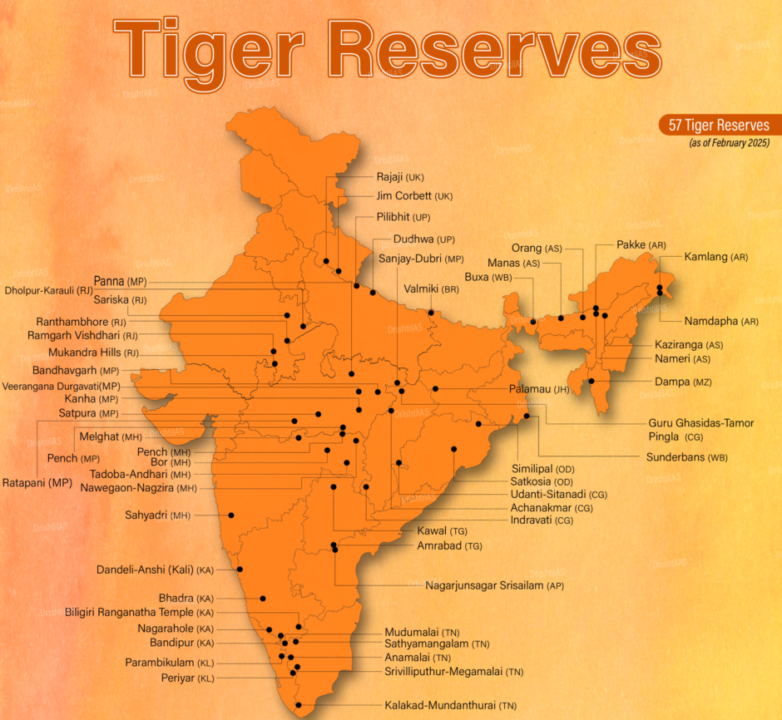
A national map of tiger reserves helps understand wildlife corridors and ecological networks. Most reserves lie in central India due to forest continuity, while eastern and southern regions show coastal and hill-based ecosystems.
Mapping also helps policymakers identify gaps in protection. New reserves are planned where habitat continuity supports tiger movement and conservation sustainability across regional landscapes.
Importance for Travelers and Wildlife Enthusiasts
Wildlife tourism provides economic support to conservation programs and local communities. Visiting tiger reserves creates awareness, encourages responsible travel, and strengthens support for protecting forests and wildlife habitats.
Travelers experience biodiversity, bird watching, and nature photography opportunities. Each reserve offers different landscapes, making every visit unique and educational for eco-tourists and nature lovers.
Best Tiger Safari Experience – What Travelers Need
Planning a safari requires preparation and awareness about seasonal conditions, booking systems, and wildlife behavior. Each reserve operates under strict entry guidelines to ensure animal safety and sustainable tourism.
Essential Travel Tips:
- Book safaris in advance through official portals
- Visit during winter and early summer for better sightings
- Follow forest guide instructions at all times
- Avoid loud sounds and plastic waste
- Respect wildlife distance and habitat rules
Role in Climate and Ecology
Tiger reserves protect large forest landscapes that act as carbon sinks. These forests absorb greenhouse gases and maintain climate balance, supporting rainfall patterns and water conservation across surrounding regions.
Healthy forests also prevent soil erosion, protect rivers, and maintain biodiversity. This makes conservation not just about wildlife but also about environmental sustainability and human survival.
Relevance for UPSC and Academic Learning
The topic is highly important for environmental studies and competitive exams. Understanding reserve distribution, conservation strategies, and wildlife laws helps in geography, ecology, and current affairs preparation.
Students learn about biodiversity protection models, community participation, and sustainable development practices. These concepts connect environmental science with policy making and national conservation frameworks.
Challenges Facing Tiger Conservation
Despite success, conservation faces multiple challenges including habitat loss, human-wildlife conflict, poaching threats, and climate change impacts. Rapid urbanization reduces forest connectivity and increases pressure on wildlife corridors.
Balancing tourism and conservation remains a major concern. Authorities continue strengthening monitoring systems, community engagement, and habitat restoration to ensure long-term protection of tigers and ecosystems.
Future of Tiger Reserves in India 2025 and Beyond
Expansion of protected areas, advanced monitoring technologies, and community-based conservation programs will shape future wildlife strategies. Sustainable tourism models and eco-friendly policies will further support conservation success.
Government initiatives aim to improve habitat connectivity, increase forest cover, and strengthen anti-poaching efforts. These steps ensure a stable future for wildlife and biodiversity across different ecological regions.
Responsible Tourism Guidelines
Travelers play an important role in conservation. Responsible tourism helps maintain ecological balance while supporting local communities and wildlife protection programs.
Best Practices
- Choose eco-friendly accommodations
- Avoid feeding or disturbing wildlife
- Support local handicrafts and communities
- Follow reserve rules and ethical travel norms
- Promote conservation awareness
FAQs
- How many tiger reserves are there in India?
India has more than fifty reserves spread across multiple states, covering diverse ecosystems such as forests, mangroves, grasslands, and hills.
- Why are tiger reserves important?
They protect biodiversity, maintain ecological balance, conserve forests, and support climate stability while providing sustainable tourism opportunities.
- Which state has the highest number of tiger reserves?
Central Indian states, especially Madhya Pradesh, host a large number due to extensive forest landscapes and strong conservation initiatives.
- What is the best time to visit?
Winter and early summer offer higher chances of sightings because animals gather near water sources and visibility improves in dry forest conditions.
- Are tiger safaris safe?
Yes, safaris are conducted under trained forest officials and strict rules ensuring visitor safety and minimal disturbance to wildlife.
- How do tiger reserves help local communities?
Eco-tourism generates employment, promotes sustainable livelihoods, and encourages community participation in conservation programs.
- What is the main threat to tiger populations?
Habitat fragmentation, poaching, and human-wildlife conflicts remain the biggest threats despite strong conservation efforts.
Final Thoughts
Tiger reserves in India represent nation’s commitment to wildlife conservation, ecological balance, and sustainable tourism. They protect forests, biodiversity, and future environmental stability while offering travelers unforgettable experiences in nature.
Understanding conservation theory, geography, and travel aspects helps readers appreciate their true value. Awareness and responsible tourism together ensure that tigers continue to thrive across protected landscapes for generations to come.