
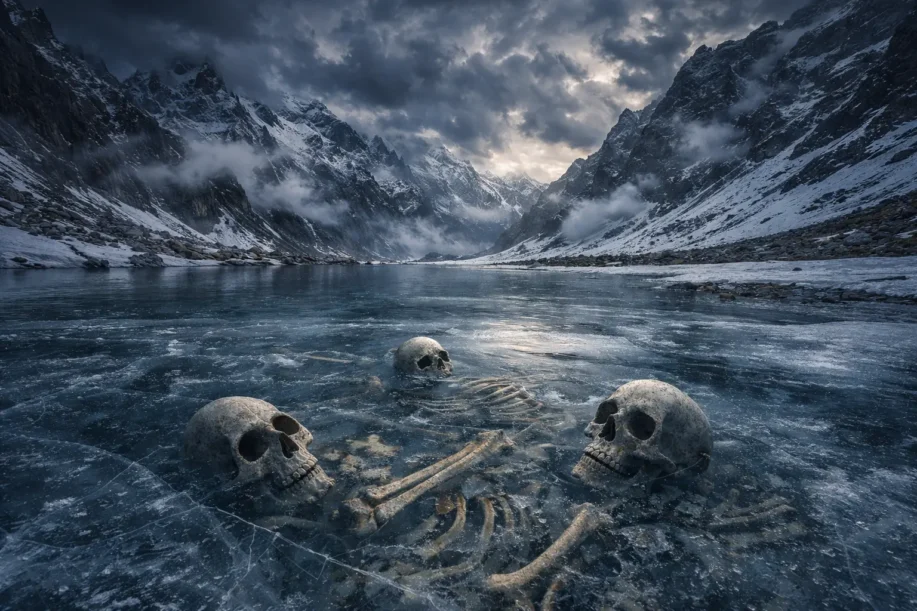
Hundreds of skeletons lie frozen in a Himalayan lake. Discover the roopkund skeleton lake story, its mystery, history, DNA clues, and dark secrets.
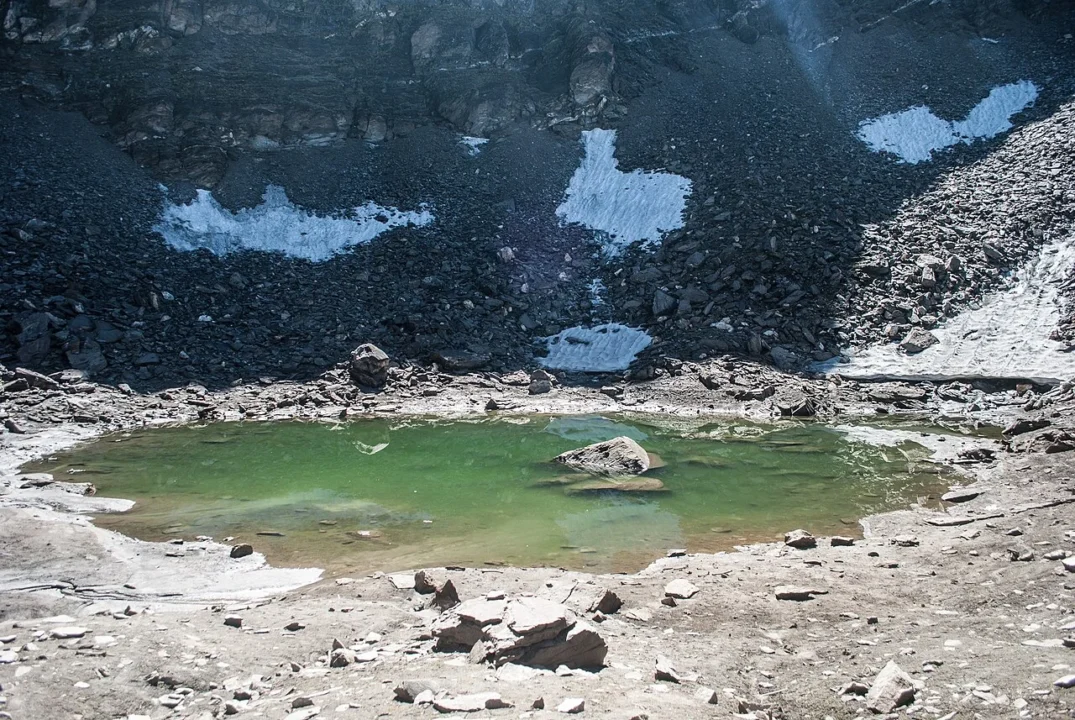
At extreme altitude in the Garhwal Himalayas of Uttarakhand, a silent frozen lake hides a terrifying secret. Known as Roopkund, the lake exposes hundreds of human skeletons locked in ice, visible even today. What seems like a scenic trekking destination is actually one of India’s most chilling and unexplained mysteries.
The roopkund skeleton lake story blends science, folklore, tragedy, and nature in a way that few places on Earth can. Often called Skeleton Lake, Roopkund continues to raise questions that even modern research has not fully answered.
Roopkund Skeleton Lake Story History
The lake sits at an altitude of about 5,029 meters (16,500 feet) and was largely unknown until 1942, when a British forest ranger accidentally discovered human remains while patrolling the area. At first, authorities suspected soldiers from World War II, but carbon dating later revealed something far older.
Studies showed that many skeletons date back to around the 9th century, while others belong to later periods. This discovery changed the narrative completely and turned Roopkund into a global mystery.
Local legends say that a royal procession angered the mountain goddess Nanda Devi, who punished the group with a deadly hailstorm. This legend aligns strangely well with scientific findings, adding depth to the riddle of the roopkund skeleton lake story.
Human Skeletons at Roopkund
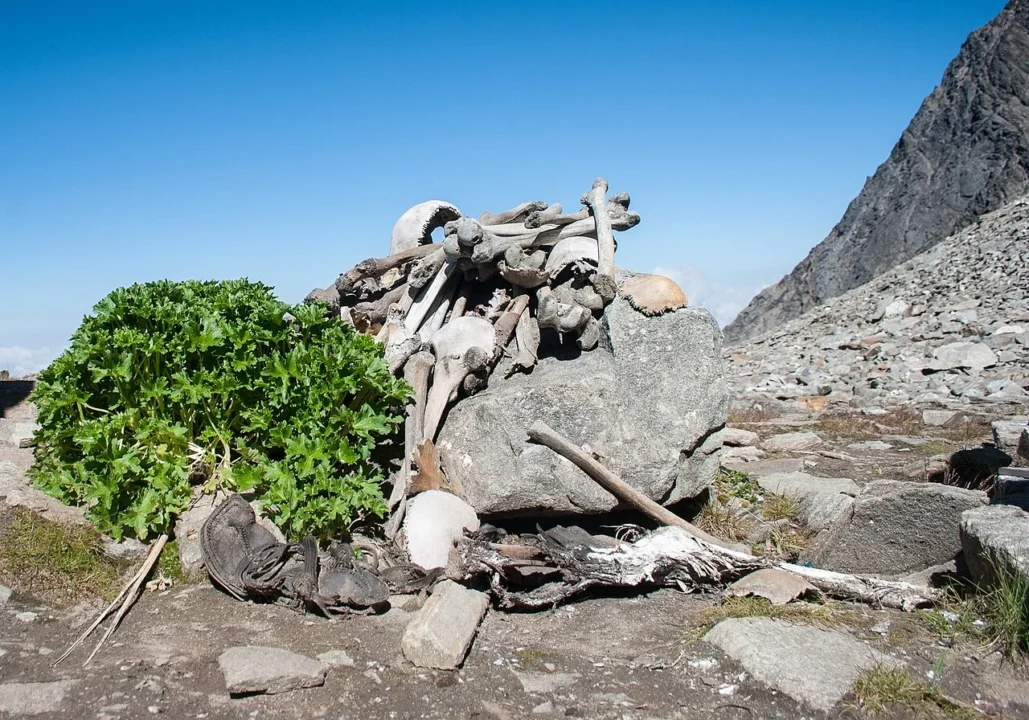
What makes this lake so haunting is the sheer number of skeletons—over 300 to 800 remains, scattered around the lakebed and shoreline.
Key observations:
- Many skulls show round fractures, suggesting blunt force trauma
- No signs of weapons or warfare
- Skeletons include men, women, and children
Some skeletons still had jewelry, leather shoes, and bamboo sticks
These details ruled out battles and pointed toward a sudden natural disaster. Scientists believe a severe hailstorm with fist-sized ice balls could have caused instant death at such high altitude.
This evidence strongly supports the idea behind the roopkund skeleton lake mystery that nature, not humans, was responsible.
Identification of Skeletons
Modern DNA research revealed one of the most surprising facts in the riddle of the roopkund skeleton lake story.
Researchers discovered:
➡️ One group of skeletons had South Asian ancestry
➡️ Another group had Mediterranean (Greek-like) ancestry
➡️ A third group had Southeast Asian roots
This means people from very different regions reached this remote Himalayan lake centuries ago. Some scientists believe Roopkund was part of an ancient pilgrimage route connected to the Nanda Devi Raj Jat festival, held once every 12 years.
Why people from distant lands traveled here remains unanswered, reinforcing the idea of Roopkund skeleton lake – a Himalayan mystery.
Preservation Concern
For centuries, ice preserved the skeletons naturally. However, climate change is now threatening this fragile site.
Major concerns include:
Melting ice exposing bones to decay
Tourists disturbing remains
Looting and illegal removal of skeletons
Environmental damage from trekking waste
The Uttarakhand government has restricted access and removed many skeletons to museums for protection. Preservation remains a major challenge as Roopkund gains popularity online.
✅ The Anjikuni Lake Mystery: How an Entire Village Disappeared Without a Trace
✅ Top 10 Most Isolated Places in the World Where People Still Live
✅ Most Weird Places in the World that Strange, Creepy & Amazing Destinations You’ll Ever See
Tourism of Roopkund (Festival & Trekking)
Trekking
The Roopkund Trek is one of India’s most famous high-altitude treks. Starting from Lohajung, it passes through alpine meadows, forests, and glaciers.
Trek highlights:
- Ali Bugyal & Bedni Bugyal meadows
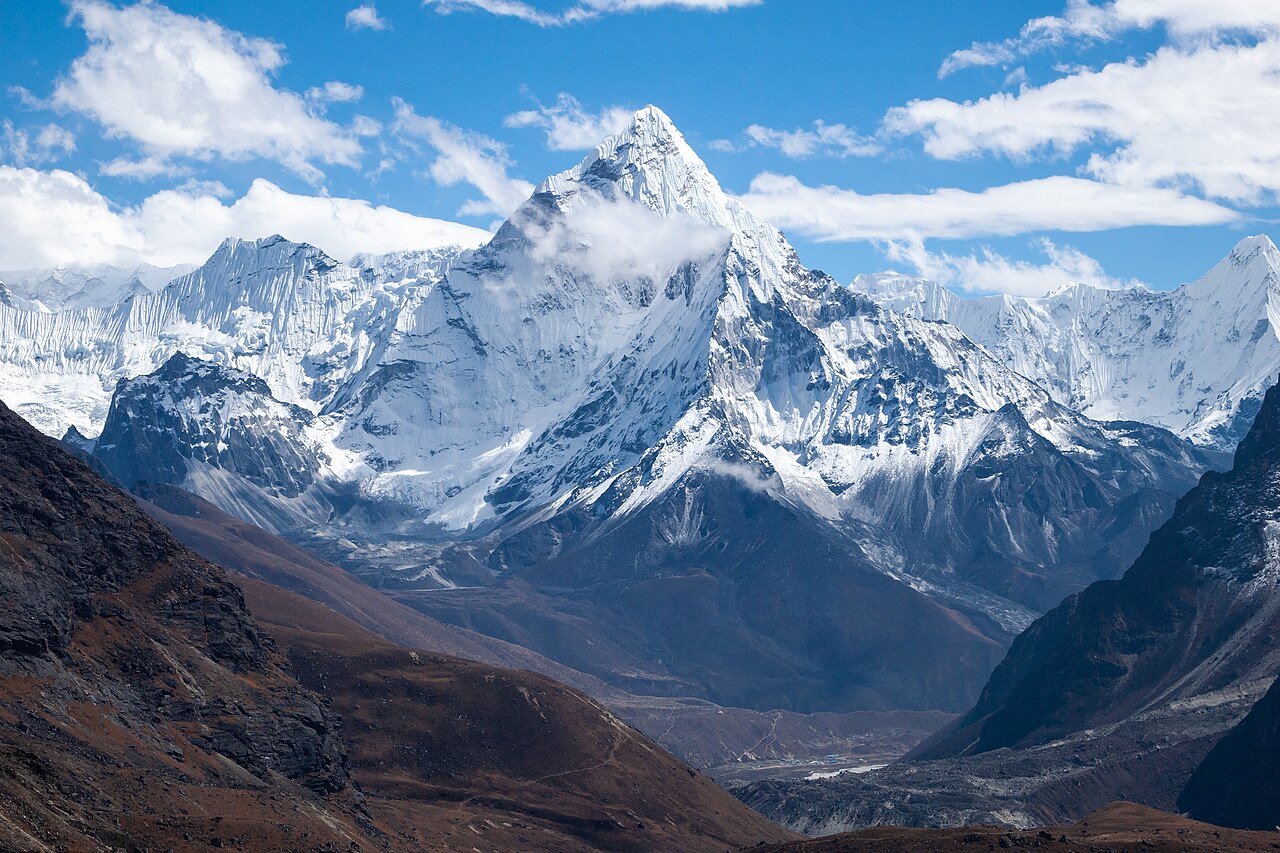
- Views of Mount Trishul & Nanda Ghunti
- Frozen lake with visible skeletons
Festival
The Nanda Devi Raj Jat Yatra, a sacred pilgrimage, is believed to be connected to the lake’s tragic past. Many locals believe the skeletons belonged to pilgrims who angered the goddess.
Tourism adds fascination but also responsibility. Respect for local beliefs and nature is essential when visiting Roopkund skeleton lake Uttarakhand.
Roopkund Transportation Guide
Reaching Roopkund requires planning due to its remote location.
How to Reach:
Nearest Railway Station: Kathgodam
Nearest Airport: Pantnagar
By Road: Kathgodam → Lohajung (approx. 10–12 hours)
Trek Start Point: Lohajung
There is no direct vehicle access to the lake. Trekking with a certified guide is strongly recommended.
Why Is Roopkund Still a Mystery?
Despite modern science, questions remain:
- Why did people from Europe travel here centuries ago?
- Why were multiple groups present at different times?
- Why was this dangerous route chosen repeatedly?
These unanswered questions keep the roopkund skeleton lake story alive in documentaries, research papers, and travel blogs worldwide.
Comparison Table: Roopkund vs Other Mysterious Lakes
| Feature | Roopkund Skeleton Lake | Lake Natron | Karachay Lake |
|---|---|---|---|
| Location | Uttarakhand, India | Tanzania | Russia |
| Mystery Type | Ancient human skeletons | Animal petrification | Nuclear radiation |
| Tourist Access | Trekking only | Limited | Restricted |
| Scientific Explanation | Partial | Known | Known |
| Cultural Legends | Strong | Low | None |
FAQs – Roopkund Skeleton Lake Story
Q1. Why is Roopkund called Skeleton Lake?
Because hundreds of human skeletons are visible in and around the lake.
Q2. Is Roopkund Skeleton Lake dangerous?
The trek is challenging due to altitude and weather but safe with proper guidance.
Q3. Can skeletons still be seen today?
Some remains are still visible, but many were removed for preservation.
Q4. What caused the deaths at Roopkund?
Scientists believe a sudden hailstorm caused fatal head injuries.
Q5. Is Roopkund open for trekking now?
Access depends on government regulations and seasonal conditions.










1 thought on “Roopkund Skeleton Lake Story: Hundreds Died Here, But Why? The Himalayan Mystery”