
Discover a complete guide to marketing strategy with proven frameworks, real-world theory, and practical steps. Learn how to build a marketing strategy plan, attract customers, and apply the 4Ps, 5 key strategies, and 7-step process for sustainable business growth.
A strong marketing strategies is the foundation of every successful business. Without a clear direction, companies waste money, time, and effort. With the right approach, they build brand awareness, attract loyal customers, and increase long-term profitability.
In simple words, a marketing strategies is a long-term plan designed to promote products or services effectively. It defines who your customers are, what problems you solve, and how you communicate your value better than competitors.
What Is Marketing Strategy?
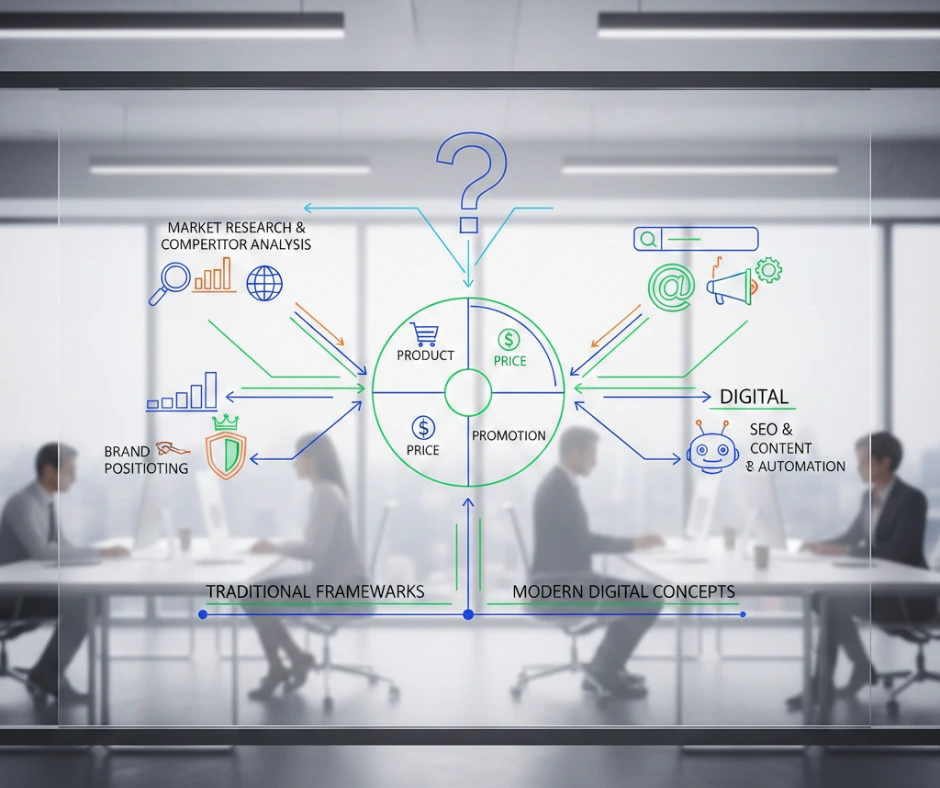
A marketing strategies is a structured plan that outlines how a business will reach potential customers and convert them into buyers. It includes market research, competitor analysis, brand positioning, pricing, and promotion channels.
The theory behind marketing strategies comes from traditional frameworks like the 4Ps (Product, Price, Place, Promotion) and modern digital concepts such as SEO, content marketing, and marketing strategies AI tools that help automate and personalize campaigns.
Why Marketing Strategy Is Important
Every business needs a marketing strategies to stay competitive. It helps you identify your target audience, understand customer behavior, and align your messaging accordingly. Without strategy, marketing becomes random promotion instead of meaningful communication.
A clear marketing strategy plan ensures consistent branding across platforms. It also improves budget allocation, allowing businesses to invest in channels that generate measurable returns instead of relying on guesswork.
Marketing Strategy to Attract Customers
One of the main goals of a marketing strategies is attracting customers. This involves identifying customer pain points and offering solutions through compelling messaging and value-driven content.
A smart marketing strategies to attract customers combines emotional triggers, clear benefits, and strong calls to action. Businesses today also use marketing strategies AI to analyze data patterns and predict buying behavior for better targeting.
What Are the 4 Marketing Strategies?
Many beginners ask, What are the 4 marketing strategies? The traditional answer refers to the 4Ps of marketing:
- Product – What you sell and its unique value.
- Price – How much customers pay.
- Place – Where you sell it.
- Promotion – How you communicate its benefits.
These elements form the core structure of any marketing strategies and remain relevant even in the digital era.
What Are the 5 Key Marketing Strategies?
When people ask, What are the 5 key marketing strategies? they usually refer to five core approaches businesses use:
Market penetration aims to boost sales within current markets by attracting more customers or increasing purchases from existing ones. Market development expands into new audiences. Product development introduces new offerings. Diversification reduces risk. Relationship marketing builds long-term customer loyalty.
Each approach strengthens a business’s overall marketing strategies and supports sustainable growth.
What Are the 7 Steps of Marketing Strategy?
Understanding the 7 steps of marketing strategies makes execution easier and more structured:
First, conduct detailed market research.
Second, define your target audience.
Third, analyze competitors.
Fourth, set clear goals.
Fifth, choose marketing channels.
Sixth, create messaging and content.
Seventh, measure and optimize performance.
Following these steps ensures your marketing strategies plan remains practical, measurable, and adaptable.
This usually refers to the expanded 7Ps marketing model:
which includes Place, Product, People, Price, Promotion, Process, and Physical Evidence.
This expanded model is widely used in service-based industries and plays a key role in building a modern marketing strategy for startups and established businesses alike.
Marketing Strategy for Startups
Startups face limited budgets and high competition. Therefore, a focused marketing strategy for startups is essential. It should prioritize niche targeting, clear value propositions, and cost-effective digital channels like SEO and social media marketing.
Startups often prepare a marketing strategies PPT to present their plan to investors. Many also search for an Introduction to marketing strategy PDF to understand foundational theory before execution.
Digital Transformation and AI in Marketing
Technology has transformed every marketing strategy. Tools powered by artificial intelligence help businesses analyze customer data, automate email campaigns, and personalize advertisements at scale.
Marketing strategy AI enables predictive analytics, chatbots, content recommendations, and dynamic pricing models. These tools make strategies more efficient while reducing manual effort and improving customer experience.
Building a Practical Marketing Strategy Plan
A powerful marketing strategies plan begins with SMART goals: Specific, Measurable, Achievable, Relevant, and Time-bound. Without measurable objectives, businesses cannot track success or improve performance.
Next, define your brand positioning clearly. Customers should instantly understand why your product is different. Your marketing strategy must communicate value consistently across websites, social media, and paid advertising.
Common Mistakes in Marketing Strategy
Many businesses fail because they copy competitors without research. A successful marketing strategies must be based on customer insights, not assumptions.
Another mistake is ignoring data. Modern marketing requires constant testing and optimization. Without tracking metrics like conversion rate and customer acquisition cost, your marketing strategies becomes inefficient and expensive.
How to Measure Marketing Strategy Success
Performance tracking is essential for refining your marketing strategies. Monitor key metrics such as website traffic, lead generation, engagement rates, and sales conversions.
Regular analysis allows businesses to adjust campaigns quickly. This data-driven approach ensures continuous improvement and strengthens long-term profitability.
Conclusion
A well-designed marketing strategies is not just about promotion; it is about understanding customers deeply and delivering value consistently. Whether you are a startup or an established company, a structured approach ensures sustainable growth.
By applying proven frameworks like the 4Ps, 7Ps, and the 7-step process, and leveraging Marketing strategy AI tools, businesses can build powerful systems that attract, convert, and retain customers effectively.
Frequently Asked Questions (FAQs)
1. What is the main purpose of a marketing strategy?
The main purpose of a marketing strategy is to identify target customers and communicate value effectively to generate consistent sales and brand growth.
2. How often should a marketing strategy be updated?
Marketing strategies should be reviewed quarterly and adjusted based on performance data, industry trends, and customer behavior changes.
3. Is marketing strategy important for small businesses?
Yes, small businesses need marketing strategies even more because limited budgets require focused and efficient promotional efforts.
4. What tools help in building a marketing strategy?
Businesses use analytics platforms, CRM software, SEO tools, and Marketing strategy AI solutions to improve targeting and campaign performance.
5. Can I create a marketing strategy without professional help?
Yes, with proper research, learning resources, and structured planning, anyone can create a basic marketing strategy and improve it over time.