
Discover Kurumbera Fort in Paschim Medinipur, West Bengal – history, architecture, travel guide, best time to visit, how to reach, and hidden facts. A perfect offbeat heritage destination for travelers.
Kurumbera Fort – A Forgotten Royal Legacy of West Bengal
Kurumbera Fort is one of the most underrated historical monuments in West Bengal, located in Paschim Medinipur district. Surrounded by villages and open landscapes, this ancient fort reflects Bengal’s medieval political and cultural history.
Unlike popular forts in India, Kurumbera Fort remains quiet and unexplored, making it a perfect destination for travelers who love heritage, architecture, and peaceful exploration without crowds or commercial tourism pressure.
Where Is Kurumbera Fort Located?
Kurumbera Fort is situated near Gaganeshwar village in Paschim Medinipur district, West Bengal. The fort stands close to the banks of the Kangsabati River, which once played a strategic role in trade and defense.
Its rural setting gives visitors a rare opportunity to explore history while experiencing authentic village life, something modern tourist hubs often fail to offer.
Historical Background of Kurumbera Fort
Kurumbera Fort was built during the 16th century, most likely under the rule of local feudal chiefs known as Bargis or regional rulers who controlled parts of southern Bengal during medieval times.
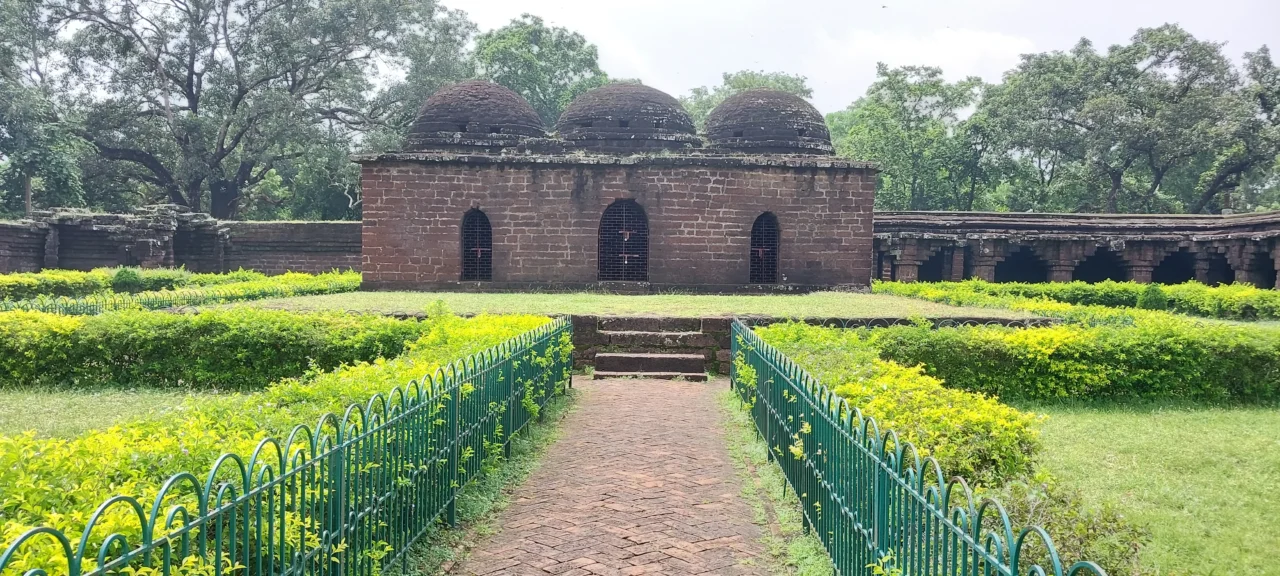
Historians believe the fort later came under the influence of the Mughal administration, which explains its unique blend of Hindu temple design and Islamic architectural elements.
Architectural Style and Design Theory
Showcases a rare fusion architecture, combining Hindu, Islamic, and regional Bengali styles. This blend reflects the political transitions of medieval Bengal, where power often shifted between local kings and imperial rulers.
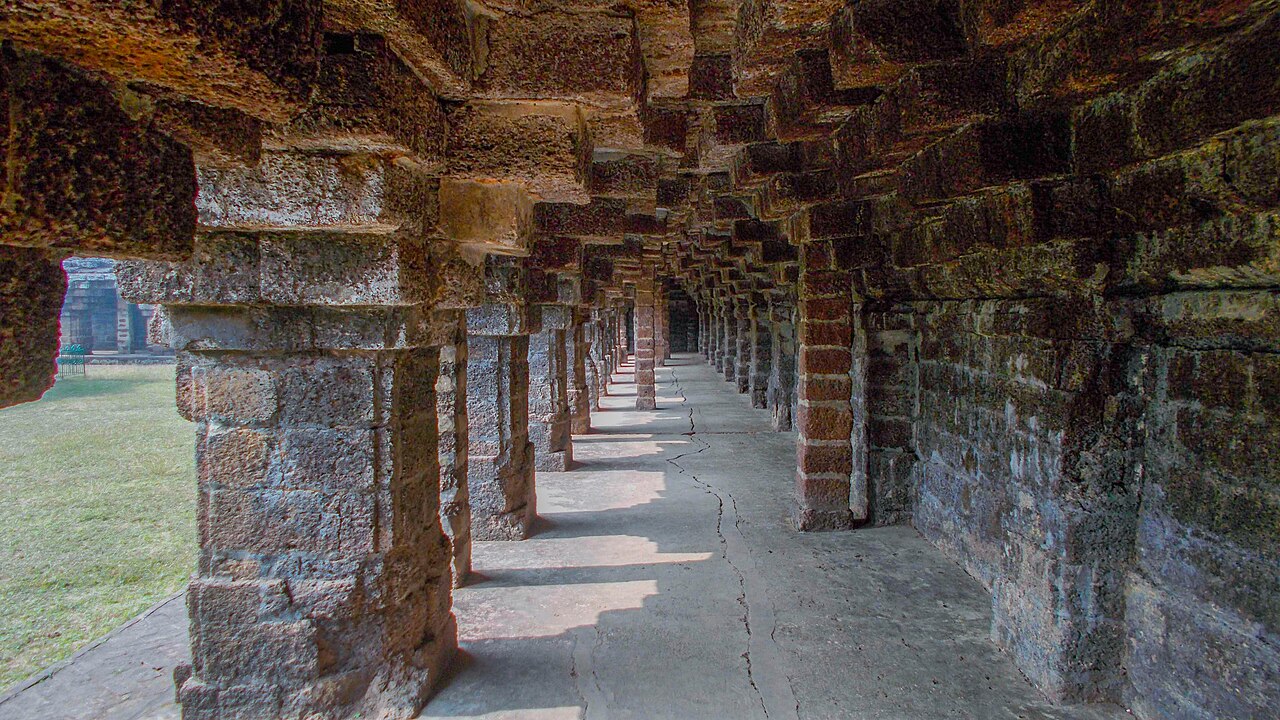
The structure is rectangular in layout, built using laterite stone and bricks, materials commonly used in temple and fort construction across Bengal during that era.
Key Architectural Highlights
The fort complex includes multiple features that make it architecturally unique and historically important for researchers and travelers alike.
- Three domed structures resembling Islamic mosques
- Stone pillars with intricate carvings
- Courtyard-style open space
- Thick defensive walls
- Remains of temple-like elements
These elements together indicate that the Fort may have served both religious and administrative purposes.
Religious Significance and Cultural Importance
One of the strongest theories suggests this Fort was not only a military structure but also a religious and cultural center. The presence of domes and pillars hints at its use as a place of worship or royal assembly.
Local beliefs say the fort was used for Vaishnavite rituals during certain periods, reflecting Bengal’s strong Bhakti movement influence in medieval times.
✅6 Powerful Offbeat Places Near Kolkata That Most Travelers Still Ignore (Peaceful Yet Stunning)
✅Ultimate Trekking Near Kolkata Spots That Feel Like a Mini Himalayan Adventure
Why Kurumbera Is Historically Important
Kurumbera stands as a symbol of Bengal’s layered history, where architecture evolved through cultural exchange rather than conflict alone. It represents how local rulers adapted external influences without losing regional identity.
This fort helps historians understand how rural Bengal functioned politically, socially, and spiritually during a time when large empires rarely focused on remote regions.
Current Condition of Kurumbera
Today, Kurumbera is maintained by the Archaeological Survey of India (ASI), though restoration efforts remain minimal. The fort is partially preserved, with many sections showing signs of weathering and neglect.
Despite this, the remaining structures still carry strong visual impact, especially during early morning or late afternoon light.
Best Time to Visit Kurumbera Fort
The best time to visit the Fort is between October and February, when the weather in Paschim Medinipur remains pleasant and ideal for walking and photography.
Avoid peak summer months, as the open structure offers little shade and temperatures can be uncomfortable for extended exploration.
How to Reach Kurumbera
Reaching Kurumbera is relatively easy if planned properly, though public transport options are limited near the final stretch.
- Nearest railway station: Midnapore (around 25 km)
- Nearest town: Kharagpur
- Road access: Available via local village roads
- Best option: Private car or hired taxi
Clear signboards are limited, so using GPS is highly recommended.
Entry Fee and Visiting Hours
Currently, there is no entry fee to visit Kurumbera Fort. The site remains open throughout the day, but daylight hours are best for safety and visibility.
There are no official guides available on-site, making prior research or local interaction helpful for understanding the fort’s significance.
Photography and Exploration Tips
Kurumbera is a paradise for heritage photographers and content creators seeking raw, untouched locations. The textures, domes, and open courtyards offer excellent framing opportunities.
- Visit early morning for soft natural light
- Carry water and sun protection
- Respect the monument and avoid climbing fragile areas
- Talk to locals for hidden stories
- Silence and patience greatly enhance the experience.
Nearby Places to Explore
A visit to Kurumbera Fort can be combined with other nearby attractions in Paschim Medinipur, creating a fulfilling offbeat travel itinerary.
- Kangsabati River banks
- Midnapore town heritage sites
- Local village temples
- Tribal cultural areas
This region is ideal for slow travel and cultural immersion.
Who Should Visit Kurumbera Fort?
Kurumbera Fort is best suited for travelers who appreciate history, architecture, and peaceful surroundings rather than luxury facilities or entertainment-based tourism.
It is ideal for:
- Heritage explorers
- Solo travelers
- Travel photographers
- History students
- Offbeat destination lovers
Families can visit, but facilities are minimal.
Travel Tips for First-Time Visitors
Since Kurumbera Fort is not a commercial tourist destination, preparation is important to ensure a comfortable visit.
- Carry snacks and drinking water
- Wear comfortable walking shoes
- Visit with daylight buffer time
- Avoid monsoon season due to muddy access roads
- Planning ahead enhances safety and enjoyment.
Why Kurumbera Fort Deserves More Attention
Kurumbera Fort deserves recognition as one of West Bengal’s most important yet overlooked heritage sites. Its architectural fusion, rural setting, and historical depth offer a rare, authentic travel experience.
Promoting such destinations supports sustainable tourism and preserves local history beyond mainstream circuits.
Final Thoughts
Kurumbera Fort is more than a ruined structure; it is a silent storyteller of Bengal’s medieval past. Visiting this fort allows travelers to connect with history without distractions.
For anyone seeking meaningful travel in West Bengal, Kurumbera Fort is a destination worth discovering and respecting.